Imitáció/Imitation
February 27, 2026 - March 27, 2026
Jancsovics Orsolya Imitáció című installációja az „imitáció” és „azonosulás” kérdésköreivel foglalkozik, továbbgondolva korábbi, Álca c. műegyüttesét. Az álcázást az alkotó beolvadásként értelmezi: „természetbe öltözésként”, a visszatérés gesztusaként a kezdetekhez, az anyatermészethez. Az öltözékek itt nem a fogyasztás világához kapcsolódnak, hanem a törzsi közösségek archaikus tudásához, az összetartozás és a természettel való egység élményéhez. A „mágikus tárggyal” kapcsolatba lépő egyén belemerülhet a flow-élménybe, elveszítheti az idő feletti uralmat, és újra találkozhat saját belső ritmusával. A függesztett munkában olyan ellentétpárok feszülnek egymásnak, mint civilizáció–kultúra, urbanizáció–természet, kortárs–archaikus, valamint férfi–nő. A férfi és nő viszonya nemcsak formai, hanem technikai értelemben is megjelenik: egyfajta androgün alkotássá olvad össze; a szobrászatban gyakran alkalmazott, maszkulin vázépítés lágyabb, női raffiaszövéssel ötvöződik. A mű lebomló alapanyagai maguk is a természet körforgását idézik.
Jancsovics Orsolya kínai tanulmányutja után köteleződött el véglegesen a szobrászat mellett. A távol-keleti kultúra művészete és filozófiája azóta is hatással van munkáira. Minden érdekli, ami múlt, ami ősi. Ugyanakkor ez nem egyszerű múltidézést vagy tradícionalizmust jelent. Számára az értékek átörökítése mindig együtt jár a folyamatos változással és dinamizmussal: a múlt és a jelen szintézisével, sőt talán a jövő megérzésével is.
Korábbi alkotásaiban már foglalkozott a gravitációval összefüggő, szobrászatot érintő kérdésekkel, mint például az egyensúllyal és az omlásveszéllyel. Munkáira gyakran jellemző a performativitás, miközben határhelyzeteket és az egyén szubjektumának kiterjedését vizsgálja.
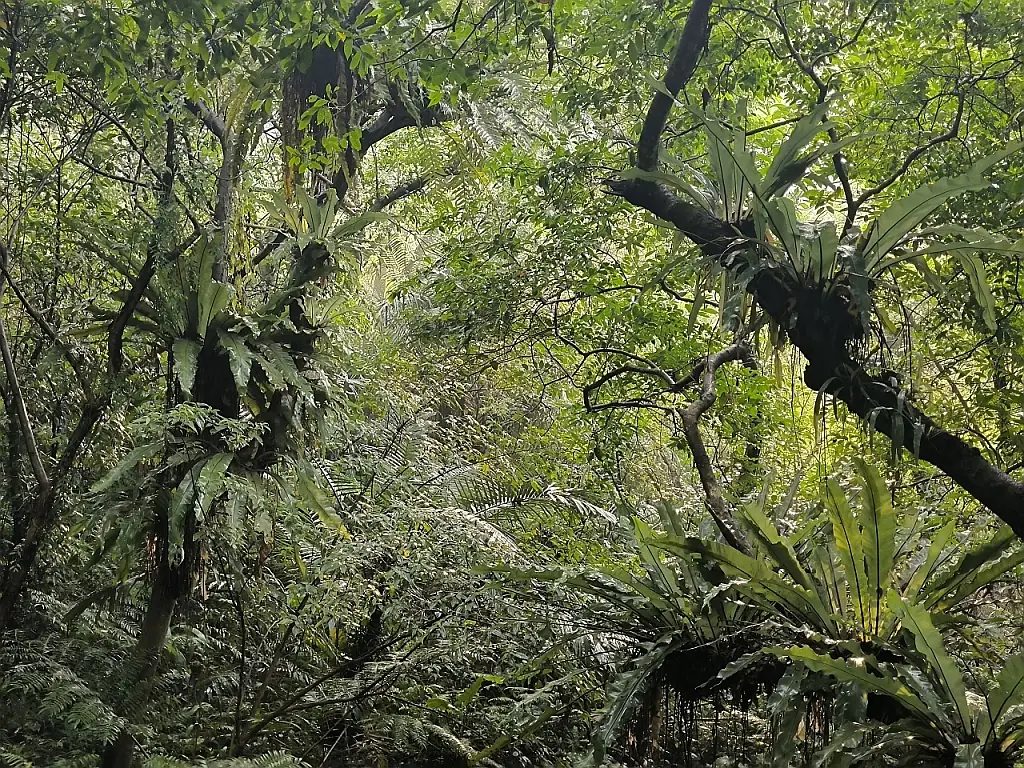
A 2025/2026-os tanév őszi szemeszterében, a Taipei National Taiwan University of Arts hallgatójaként készítette el Sértett Sziget című installációját, melynek továbbgondolása a Puccsban megvalósuló, Tajvanról hozott banján-gyökerekből, valamint drótokból, raffiából és fonalakból összeállított mű. A gigacity utcáit járva, a művészt lenyűgözték a banján (fojtófüge) magasból lecsüngő és mindent beszövő gyökerei, melyek olyan érzetet keltenek, mintha a fának emberi haja lenne. És amely mellett ott van az épületek falain kívül futó elektromos vezetékek hálózata, amit Európában inkább elrejtenek. Ez a kétféle "kötél" párhuzamot teremt a természetes és a mesterséges között, akárcsak néhány szintetikus darab, amelyet az alkotó maga is használ. Tajvanon lépten-nyomon egyszerre látni a lenyűgöző természet erejét és a modern, technokrata, urbánus társadalom érdektelenségét, elzárkózottságát a táj szépségei iránt.
***
Orsolya Jancsovics' installation entitled Infinity of Columns deals with the issues of "imitation" and "identification," further developing her earlier series of works entitled Disguise. The artist interprets disguise as a form of blending in: "dressing up as nature," a gesture of returning to the beginning, to Mother Nature. The costumes here are not related to the world of consumption, but to the archaic knowledge of tribal communities, the experience of belonging and unity with nature. The individual who comes into contact with the "magical object" can immerse themselves in the flow experience, loose control over time, and reconnect with their own inner rhythm. The suspended work features contrasting pairs such as civilization–culture, urbanization–nature, contemporary–archaic, and male–female. The relationship between men and women appears not only in formal but also in technical terms: it merges into a kind of androgynous creation; the masculine framework often used in sculpture is combined with softer, feminine raffia weaving. The decomposing materials of the work themselves evoke the cycle of nature.
After her study tour in China, Orsolya Jancsovics made a definitive commitment to sculpture. The art and philosophy of Far Eastern culture have continued to influence her work ever since. She is interested in everything that is ancient and belongs to the past. However, this does not mean that she is simply nostalgic or traditionalist. For her, the transmission of values always goes hand in hand with constant change and dynamism: a synthesis of the past and the present, and perhaps even a sense of the future.
In her earlier works, she has already dealt with issues related to gravity and sculpture, such as balance and the risk of collapse. Her works are often characterized by performativity, while exploring borderline situations and the extent of the individual subject.
In the fall semester of the 2025/2026 academic year, as a student at Taipei National Taiwan University of Arts, she created her installation entitled Injured Island, which is the precedent of the work created in Puccs, composed of banyan roots brought from Taiwan, as well as wires, raffia, and yarn. Walking through the streets of the gigacity, the artist was fascinated by the banyan tree's roots hanging down from above and intertwining everything, giving the impression that the tree had human hair. And next to it is a network of electrical wires running along the walls of buildings, which in Europe tend to be hidden away. These two types of "ropes" create a parallel between the natural and the artificial, as do some of the synthetic pieces used by the artist herself. In Taiwan, one can simultaneously observe the impressive power of nature and the indifference and isolation of modern, technocratic, urban society towards the beauty of the landscape.
Megtekinthető: 0-24h
Szervezés: Parallel Művészeti Alapítvány
Kurátor: Pintér Gábor
Támogató: Józsefvárosi Önkormányzat
www.parallelalapitvany.hu
Viewing Hours: 0-24h
Organized by Parallel Art Foundation
Curator: Gábor Pintér
Supported by Józsefváros Municipality
http://www.parallelfoundation.com